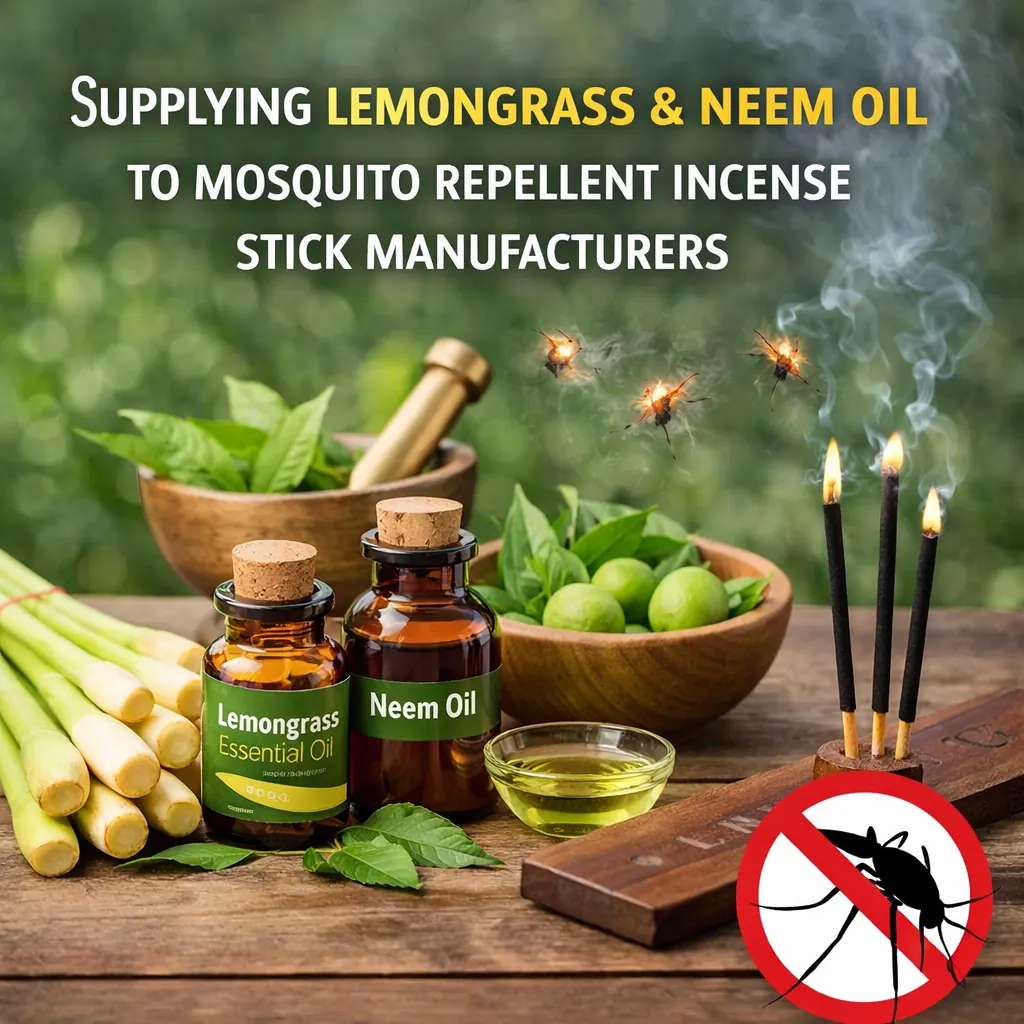
Natural mosquito-repellent incense is a fast-growing category across India, the Middle East and Africa. Two botanicals dominate manufacturer enquiries: lemongrass essential oil and neem seed oil. Both are traditional choices in this segment — but turning them into a compliant, effective finished product requires more than buying the right drum.
Why lemongrass and neem are the usual starting points
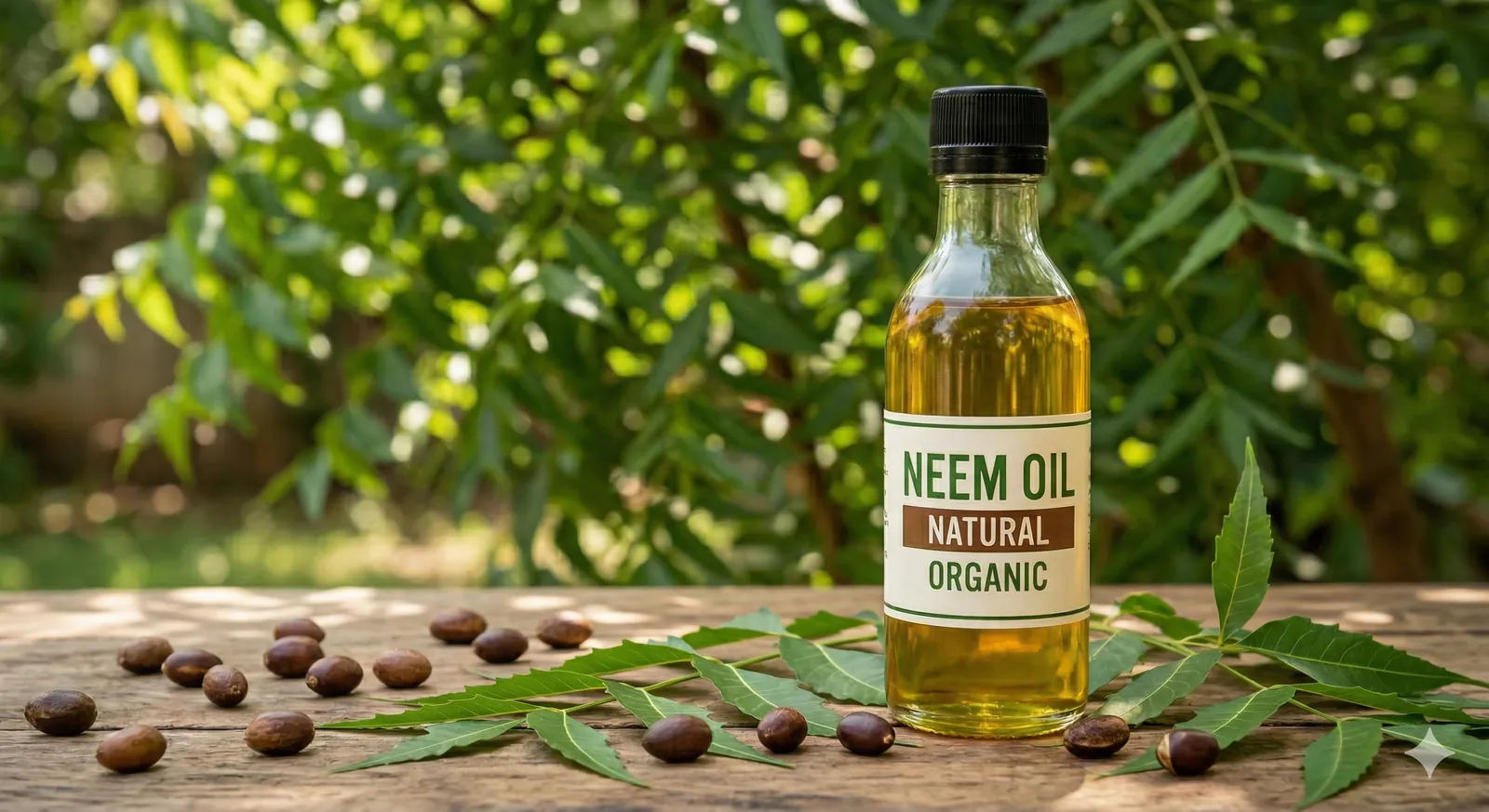
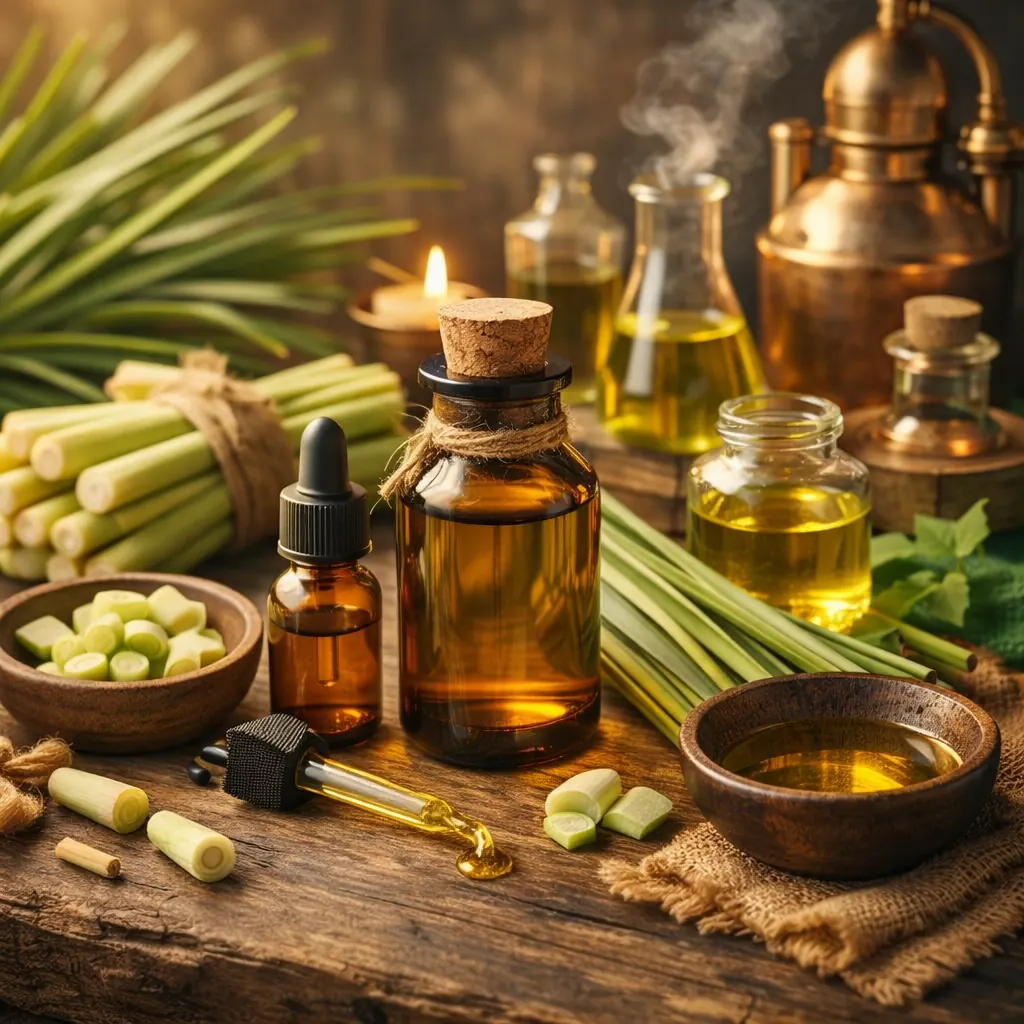
Lemongrass essential oil (Cymbopogon flexuosus/citratus) is rich in citral and carries a sharp, citrus-green profile that remains recognisable in smoke — one reason it is so common in repellent-positioned incense. Neem seed oil (Azadirachta indica) is a fixed, cold-processed seed oil with a long tradition in Indian household pest-management formats; in incense it is used as a functional botanical component rather than a fragrance.
Formulation realities to plan for
- Neem is not an essential oil. It is a heavier fixed oil that behaves differently in dipping blends and burn profiles. Loading levels, carrier compatibility and stick drying time all need trials.
- Smoke character changes everything. Approve materials by burn trial, not by smelling the drum.
- Stability matters. Citral-rich oils can evolve during storage of finished sticks; run shelf-ageing checks on cured production samples, not just fresh dips.
- Batch consistency drives dosing. If oil character drifts between lots, repellent perception and fragrance both drift. Review batch documentation before purchase.
Who owns the "repels mosquitoes" claim?
This is the point most often misunderstood. Herbistry — like any raw-material supplier — supplies the oils. Repellency efficacy, burn safety, stability, labelling and regulatory registration of the finished incense are the finished-product manufacturer's responsibility, and requirements differ by country (for example, household-insecticide style registrations in some markets). No supplier can honestly guarantee that a finished stick will repel mosquitoes, because efficacy depends on the full formulation, dosing, stick base and burn conditions. Budget for your own efficacy testing before printing claims.
A sensible trial sequence
- Order trial quantities of lemongrass oil and neem seed oil with available batch documents.
- Run dip trials at two or three loading levels; cure fully.
- Assess burn quality, fragrance in smoke and after-smell.
- Age cured samples for several weeks and re-test.
- Commission efficacy testing on the finished format you intend to sell.
- Scale to commercial volumes once documentation and performance are locked.
Bulk supply from Herbistry
Herbistry supplies lemongrass essential oil with direct farmer-linked sourcing, and neem seed oil with a minimum order quantity of 200 kg. COA and SDS are batch-dependent. Relevant essential-oil batches are evaluated internally through GC-MS; report sharing may be discussed for selected high-volume or export enquiries. Message us on WhatsApp with your format, monthly volume and target markets to receive commercial terms.
Disclaimer: Herbistry supplies raw materials. Final formulation efficacy, stability, labelling, registration and regulatory compliance remain the responsibility of the finished-product manufacturer. Nothing in this article is medical advice or a finished-product performance guarantee.