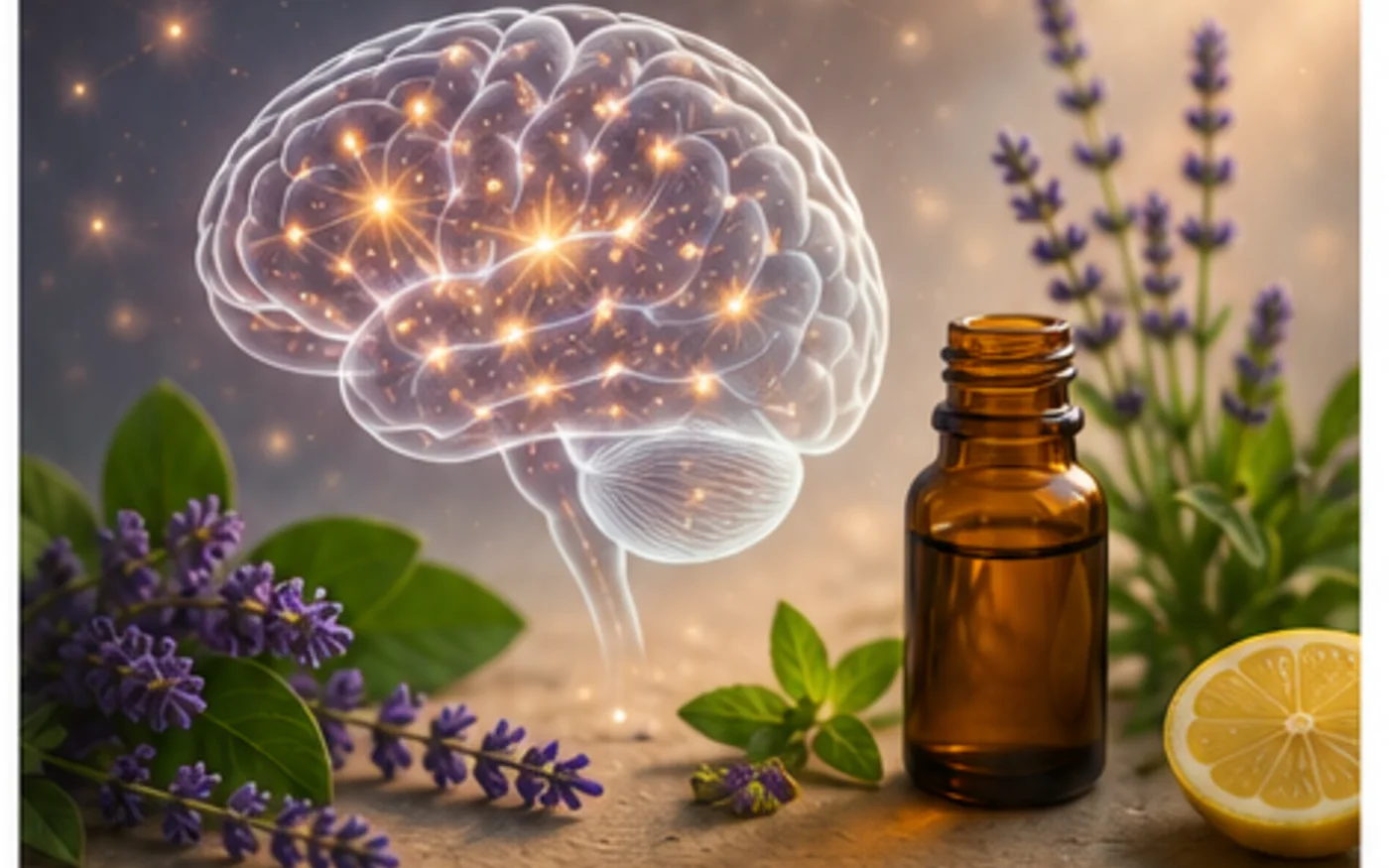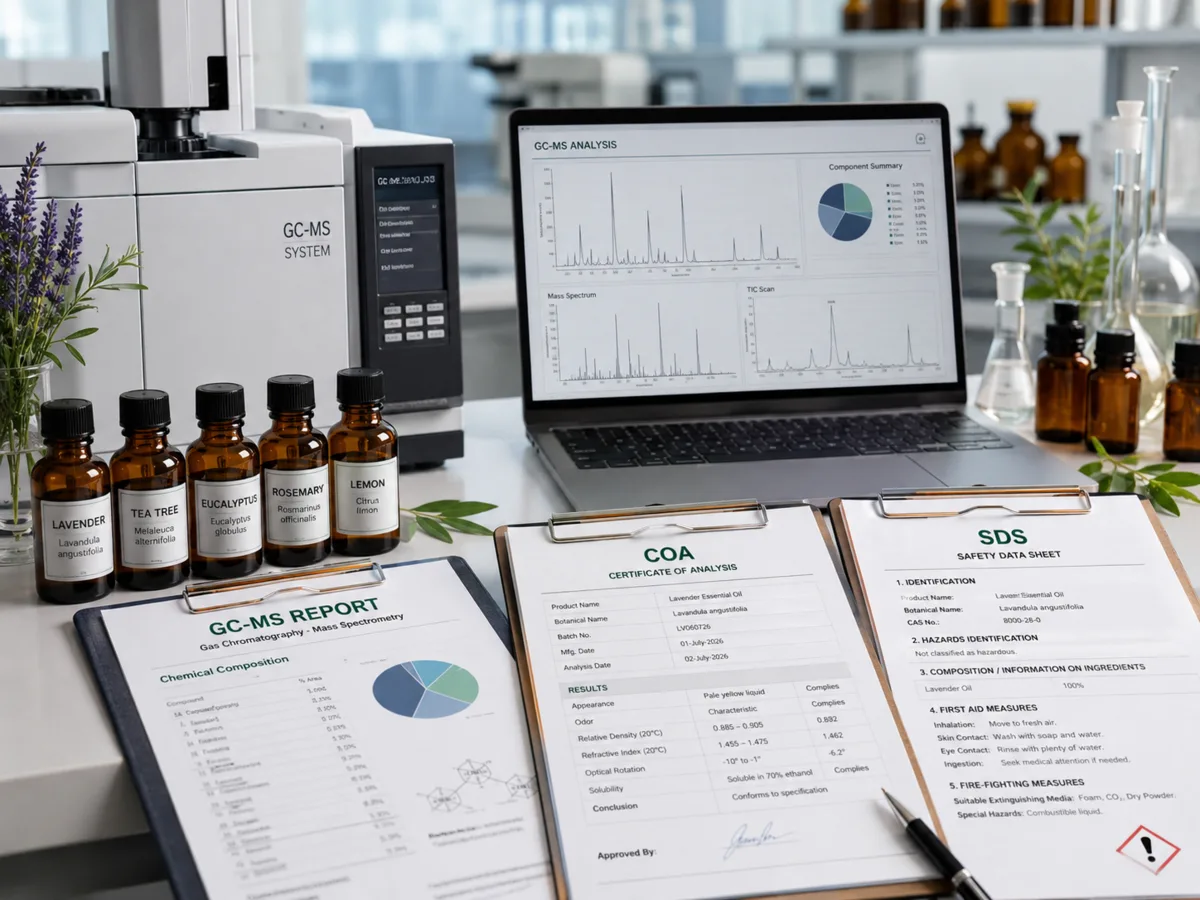

Fragrance appears in perfumes, air fresheners, personal-care products, candles, incense and household products. Yet not every scented product has the same composition, intended use or exposure profile. Essential oils are concentrated plant extracts containing volatile compounds such as linalool, limonene, 1,8-cineole, menthol, α-pinene and eugenol.
Synthetic fragrances are typically designed for scent performance, stability and cost. Essential oils are often used in aromatherapy because their volatile molecules can be inhaled and detected by the olfactory system. Neither category should be described as universally safe or harmful: safety depends on the specific material, dose, purity, ventilation, duration and individual sensitivity.
How essential-oil inhalation works
When aroma molecules are inhaled, they reach olfactory receptors in the nose. Signals are transmitted to brain regions involved in smell, emotion, memory and autonomic responses. This connection helps explain why aroma may influence mood, relaxation, alertness and the perception of stress.
Responses vary considerably. The oil, concentration, exposure time, previous experience, personal preference and health status all matter. Expectation and the surrounding environment can also influence how a fragrance is perceived.
Potential benefits of essential-oil inhalation
Mood and stress support
Lavender, bergamot, sweet orange and other pleasant aromas have been investigated for relaxation and perceived stress reduction.
Sleep routines
Lavender and other calming aromas may support sleep quality for some individuals when used as part of a consistent bedtime routine.
Alertness and mental clarity
Rosemary, peppermint, lemon and eucalyptus aromas are often associated with freshness and have been explored in attention and mental-fatigue research.
Emotional and sensory well-being
Smell is closely connected with memory and emotion. A familiar or pleasant aroma can change the atmosphere of a room and shape the sensory experience.
Non-invasive use
Inhalation does not require swallowing an essential oil, making it one of the simplest aroma-use methods when performed appropriately.
Plant-derived aromatic complexity
Essential oils naturally contain multiple volatile constituents, often producing a layered aroma rather than a single-note scent.
Essential-oil inhalation compared with synthetic fragrances
| Consideration | Essential oils | Synthetic fragrance products |
|---|---|---|
| Composition | Complex plant-derived volatile mixtures that vary by species, origin and batch. | Individual aroma chemicals or designed mixtures selected for scent, stability and performance. |
| Typical purpose | Aromatherapy, sensory experience, perfumery and product formulation. | Perfuming, odour masking, product identity and long-lasting scent performance. |
| Consistency | Natural variation is expected and should be managed through specifications and quality control. | Can be engineered for strong batch-to-batch consistency. |
| Safety | May irritate skin, eyes or airways and can trigger allergy or headache in sensitive users. | May also cause irritation, sensitisation or headache depending on ingredients and exposure. |
| Key point | Natural origin does not automatically mean harmless. | Synthetic origin does not automatically mean harmful. |
Practical advantages of controlled essential-oil inhalation
- Short, controlled aroma sessions are easy to adjust.
- Oils can be selected for a desired sensory experience such as calmness, freshness or focus.
- High-quality oils provide an identifiable botanical origin.
- Diffusion intensity can be changed by reducing drops and exposure time.
- It may reduce reliance on continuously operating, heavily perfumed room-freshening products.
Safe ways to inhale essential oils
- Add only a few drops to an appropriate diffuser and follow the manufacturer’s instructions.
- Use intermittent diffusion rather than continuous exposure.
- Keep the room ventilated and avoid positioning the diffuser directly beside the face.
- Do not apply undiluted essential oil inside the nostrils.
- Keep oils away from children and pets unless qualified guidance has been obtained.
- Stop use if headache, coughing, dizziness, nausea, eye irritation or breathing discomfort occurs.
Conclusion
Essential-oil inhalation can provide more than a pleasant scent. Depending on the oil and the individual, it may support relaxation, sleep routines, alertness, emotional comfort and sensory well-being. The most responsible approach is controlled exposure, realistic expectations and recognition that both natural and synthetic aromatic materials require informed safety assessment.
Research references
References are provided for further reading. This article is educational and does not replace medical diagnosis, treatment or professional advice.
- Diepgen, T. L., & Ofenloch, R. F. (2016). Fragrance allergy. Chemical Immunology and Allergy, 101, 130–142.
- Kapoor, V. P. (2014). Essential oils for mental health. Natural Product Communications, 9(3), 358–362.
- Koulivand, P. H., Ghadiri, M. K., & Gorji, A. (2013). Lavender and the nervous system. Evidence-Based Complementary and Alternative Medicine, 2013, Article 681304.
- Lehrner, J., Marwinski, G., Lehr, S., Johren, P., & Deecke, L. (2005). Ambient odor of orange in a dental office reduces anxiety and improves mood in female patients. Physiology & Behavior, 86(1–2), 92–95.
- Field, T., Diego, M., Hernandez-Reif, M., & Schanberg, S. (2008). Aromatherapy research: Evidence for sedative effects of essential oils. Complementary Therapies in Clinical Practice, 14(3), 66–73.
- Bakkali, F., Averbeck, S., Averbeck, D., & Idaomar, M. (2008). Biological effects of essential oils: A review. Food and Chemical Toxicology, 46(2), 446–475.
- Jurgens, U. R., Stober, M., & Vetter, H. (1998). Scent of lavender: Effects on mood and autonomic nervous system. Zeitschrift für Naturforschung C, 53(7–8), 607–614.
- Bonsni, M., Jirotka, M., & Micheliw, E. (2016). Essential oils inhalation for anxiety treatment: A systematic review. International Journal of Immunopathology and Pharmacology, 29(4), 628–639.
- Smallwood, J. (2011). The benefits of aromatherapy. Nursing Standard, 25(31), 35–40.
- Buckley, N. A., & McManus, P. R. (2013). A systematic review of the aromatherapy literature. Complementary Therapies in Medicine, 21(4), 308–316.